The biotech industry has reached a “Moment of Reckoning.” The era of voluntary “Net-Zero” pledges has been replaced by performance-based ESG. For modern biotech operators, the facility is no longer just a site for science; it is a resource-intensive ecosystem where water, energy, and waste management directly impact both the balance sheet and the “Social License to Operate.”
With new regulatory frameworks like IFRS S1 and S2 now mandatory for many large-scale entities, sustainability has officially moved from the CSR report to the financial statement. Here is how leading biotech facilities are prioritizing their ESG execution this year.
Water Stewardship: From Consumption to Circularity

High-purity water is the lifeblood of biotech, but it is also one of its greatest environmental costs. Standard Reverse Osmosis (RO) and Deionized (DI) systems can “reject” up to 50% of total water intake as waste.
Reducing the “Reject” Ratio: In 2026, operators are retrofitting RO systems with advanced “cross-filtration” and AI-driven pressure tuning to move recovery rates from 75% toward 90% or higher.
Process-Water Recycling: Implementing “Purple Pipe” infrastructure allows facilities to reuse non-potable greywater for cooling towers—which account for roughly 25% of a typical lab’s water use—and site irrigation.
Leak Detection at Scale: Utilizing acoustic IoT sensors, facilities are now identifying micro-leaks in high-pressure laboratory plumbing that previously went undetected for months, preventing “silent” resource drain.
Energy Decarbonization: The “Silicon Lab” Challenge
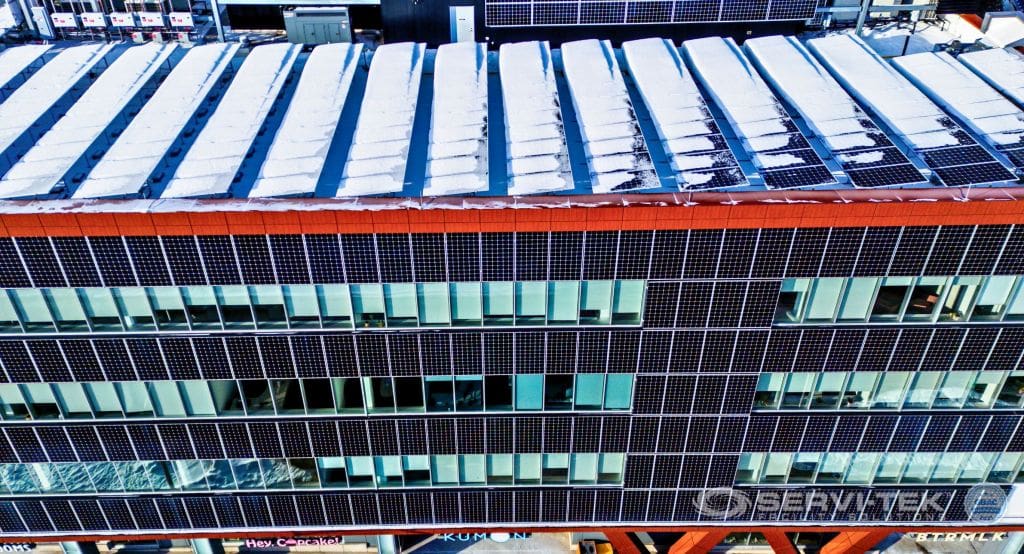
The 2026 biotech facility is essentially a data center with wet lab capabilities. The surge in GPU-intensive computational biology has shattered traditional energy benchmarks, making efficiency an existential necessity.
The Electrification Pivot: In 2026, gas-fired boilers are being phased out in favor of Industrial Heat Pumps. These systems are now capable of delivering heat up to 150°C with a Coefficient of Performance (COP) of 4.0—meaning they deliver four units of heat for every unit of electricity consumed.
Demand-Controlled Ventilation (DCV): HVAC is the largest energy consumer in any lab. Transitioning from fixed air changes to sensor-based DCV allows labs to drop from 12 air changes per hour (ACH) to 4 ACH when unoccupied, drastically reducing the carbon footprint.
Battery Storage (BESS): To hedge against grid volatility, biotech owners are installing on-site batteries to “peak-shave” during high-cost utility hours and provide a seamless bridge for sensitive R&D assets.
Waste & Circularity: Solving the “Single-Use” Crisis
Biotech produces a staggering amount of plastic waste—estimated at 5.5 million tons globally pre-2026. This year, the focus is on moving from “disposable” to “circular.”
Advanced Chemical Recycling: Traditional mechanical recycling can’t handle contaminated lab plastics (pipette tips, well plates). In 2026, biotech clusters are partnering with vendors specializing in pyrolysis and enzymolysis, which break down specialized plastics into high-value chemical ingredients.
Just-in-Time Chemical Management: Digital inventory tracking is now used to reduce the 20% of lab chemicals that typically expire before use. By lowering inventory levels, firms reduce hazardous waste disposal costs and environmental risk.
Packaging “Take-Back” Programs: Mandating that vendors take back cold-chain shipping containers and styrofoam coolers is a core 2026 strategy for eliminating Scope 3 upstream waste.
Data & Governance: The “Audit-Ready” Era
The most significant change in 2026 is how ESG data is handled. We have moved from manual spreadsheets to Digital Monitoring, Reporting, and Verification (dMRV).
IFRS S1 & S2 Compliance: All resource data must now be “investor-grade.” Leading facilities use automated dashboards that link energy and water meters directly to annual financial reports.
Green Lab Certifications: Programs like My Green Lab® are no longer optional “badges.” They are now used as operational frameworks to attract ESG-conscious venture capital during the 2026 funding rebound.
The Bottom Line
In 2026, ESG in biotech is about Operational ROI. Reducing water waste, electrifying heat, and closing the plastic loop isn’t just “good for the planet”—it protects asset value, lowers the cost of capital, and ensures your facility is ready for the next decade of discovery.