As we step into 2026, the life sciences sector has moved past the era of digital experimentation. The “wait and see” approach to AI and automation has been replaced by a mandate for enterprise integration. With R&D timelines compressing and global regulatory bodies tightening their grip on data integrity, your physical facility is no longer just a shell—it is a critical operational partner.
Is your lab ready for the demands of 2026? Use this readiness checklist to audit your infrastructure, safety protocols, and digital foundations.
1. Infrastructure: The “Agentic-Ready” Backbone
In 2026, the industry is buzzing about Agentic AI—systems that don’t just suggest insights but autonomously manage documentation and regulatory workflows. To support this, your facility needs more than just basic power.
High-Density Power Audit: GPU-heavy computational suites and automated high-resolution imaging platforms require up to 3x the power density of traditional labs. Ensure your electrical backbone can handle the heat and the load.
Low-Latency Fiber: Moving massive datasets from multi-omics or spatial biology experiments requires a low-latency, high-bandwidth network. If your data is bottlenecked at the wall jack, your AI models will suffer from “data starvation.”
Predictive Facility Management: Transition your Building Management System (BMS) from “break-fix” to predictive. By 2026, AI-driven sensors should alert your team to a failing chiller or a humidity spike before it compromises a multi-million dollar study.
2. Laboratory Design: Modular & Robotics-First
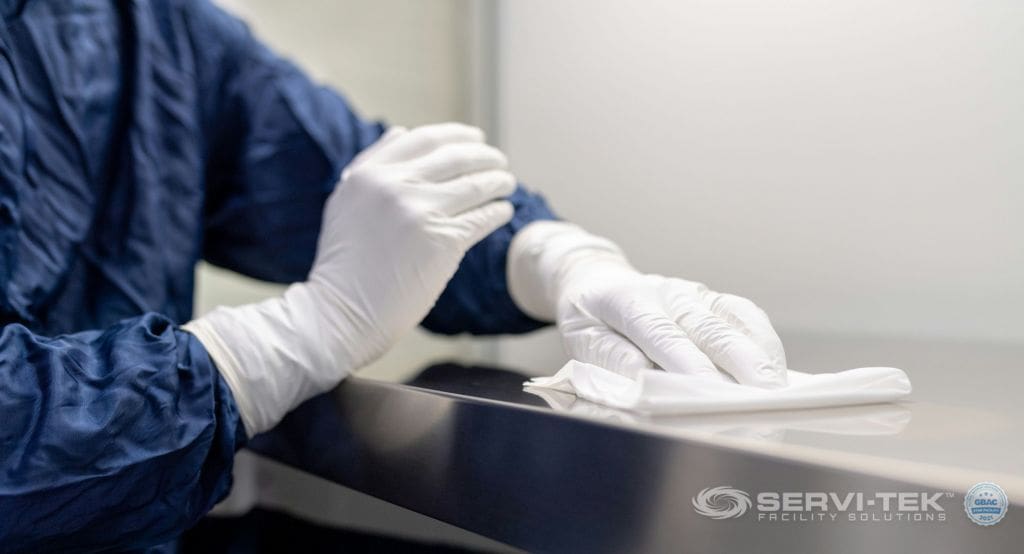
The fixed-wall lab is a relic of the past. 2026 is the year of modular cleanrooms and hybrid workforces where humans and robots share the floor.
POD-Based Modality: Use modular “POD” cleanroom designs that allow you to pivot between mRNA, cell therapy, or traditional biologics in weeks rather than months.
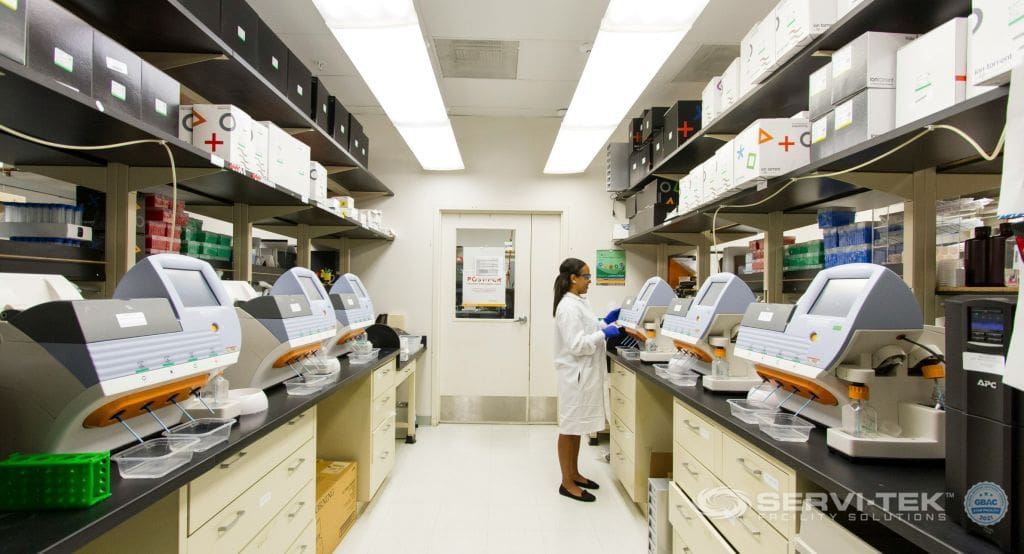
Automation Lanes: Audit your floor plans for “robot-clear” zones. As autonomous agents begin handling sample transport and liquid handling, they need dedicated paths and safety clearances that don’t disrupt human researchers.
Plug-and-Play Casework: Ceiling-mounted service panels and mobile lab benches are now standard, allowing for rapid reconfiguration of lab spaces as project priorities shift.
3. Safety & Compliance: The 2026 Deadlines
Regulatory agility is the defining trait of successful firms this year. Several major compliance windows are closing in 2026.
OSHA HazCom July 2026 Deadline: Employers must have their updated Hazard Communication programs—including new labels for small containers and revised worker training—fully implemented by July 20, 2026.
EPA Methylene Chloride Rule: For non-federal laboratories, the clock is ticking. You must complete your initial monitoring by November 9, 2026. This is a significant drop in exposure limits (from 25 PPM down to 2 PPM ECEL), requiring immediate engineering control assessments.
BMBL 6th Edition Audit: Ensure your risk assessments are aligned with the latest CDC/NIH guidance, specifically regarding aerosol-generating procedures in BSL-2 and BSL-3 environments.
4. Sustainability: From Pledges to Performance
ESG (Environmental, Social, and Governance) is now a core part of the “Validation Master Plan.” 2026 investors are looking for audit-ready energy data.
Water “Sipping” Infrastructure: In water-stressed clusters, facilities must move toward closed-loop cooling or wastewater recycling to meet 2026 conservation mandates.
Smart Sub-metering: To comply with IFRS S1 & S2 reporting standards, you must be able to report real-time energy use at the equipment level.
My Green Lab® Certification: This has become the “Gold Standard” for lab sustainability. If your facility hasn’t undergone a green lab audit yet, Q1 is the time to start.
5. Security: The Cyber-Physical Shield
In 2026, IP is stored in the cloud but generated in the lab. A breach in your HVAC system can be an entry point for data theft.
IoT Ringfencing: Implement a Zero-Trust architecture for every connected pipette and incubator.
Biometric Access Zones: Physical security must match digital security. Ensure your highest-value R&D zones are protected by multi-factor biometric access.
Digital Twin Testing: Use digital twins to simulate “cyber-physical” attacks—what happens to your cryo-storage if your digital controls are compromised?
The Bottom Line
Facility readiness in 2026 is about resilience. The most successful life sciences organizations are those whose buildings are as agile as their science. By checking these boxes in Q1, you ensure that your facility is a catalyst for discovery, not a bottleneck.