The biotech industry has reached a “Moment of Reckoning” regarding its physical assets. The era of the “standard lab” is over. Driven by the twin engines of Generative AI and Global Decarbonization, the systems that keep a building running—HVAC, Power, and Redundancy—have moved from the mechanical room to the boardroom.
For owners of buildings over 20,000 sq ft, these three critical systems are no longer just utilities; they are the primary drivers of Net Operating Income (NOI) and scientific continuity.
HVAC: The Shift to “Smart Purge” and Low-GWP Compliance
In 2026, the “brute force” method of running 12 Air Changes per Hour (ACH) around the clock is a relic. Modern labs are pivoting toward Demand-Controlled Ventilation (DCV).
Precision Airflow: Using AI-driven sensors to detect real-time particulates, labs now run at a baseline of 4 ACH when occupied, only surging to “Smart Purge” modes (10+ ACH) when a spill or high VOC level is detected. This shift alone can reduce energy costs by up to 30%.
The Refrigerant Deadline: As of January 1, 2026, the AIM Act is in full effect. New commercial equipment must use low-GWP refrigerants like R-454B or R-32. Owners with legacy systems using R-410A are already seeing “maintenance premiums” as refrigerant supplies tighten.
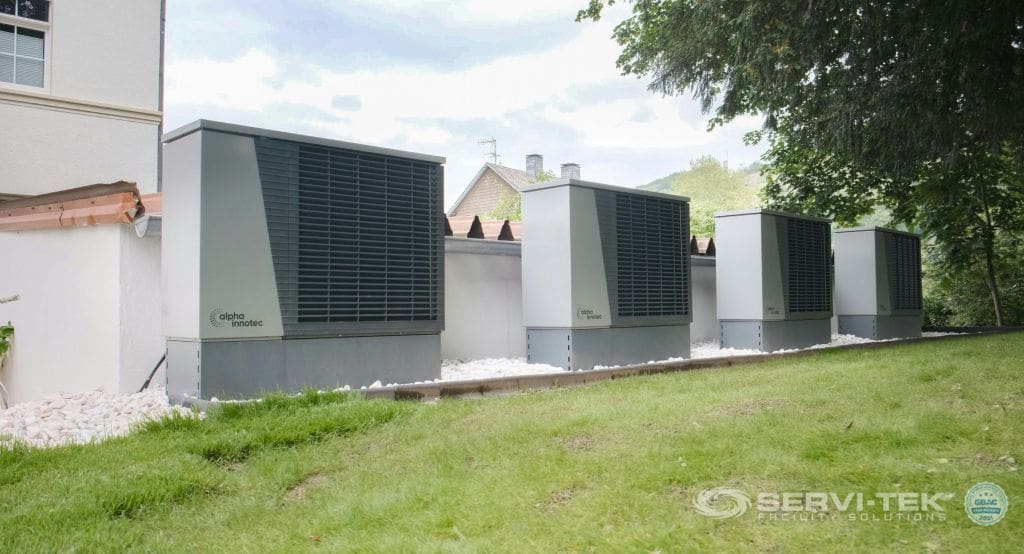
Heat Pump Electrification: To meet new 2026 emissions standards, buildings are replacing natural gas boilers with industrial-scale heat pumps. These systems capture “Green Heat” tax credits while providing the precise temperature stratification required for sensitive cleanroom environments.
Power Density: Fueling the “Silicon Lab”
The 2026 biotech facility is essentially a data center with wet lab capabilities. The rise of computational biology and high-throughput automation has shattered traditional power benchmarks.
The 50W Standard: While standard labs previously ran on 15–20 watts per sq ft, 2026’s AI-intensive zones often require 50W/sq ft or more. This is fueled by localized GPU clusters used for molecular modeling and real-time imaging.
Energy Storage (BESS): To hedge against rising utility rates and grid instability, smart owners are installing Battery Energy Storage Systems. These allow facilities to “peak shave”—using stored energy during expensive afternoon hours—while providing a seamless bridge during power fluctuations.
EV Fleet Ready: Owner-occupants are increasingly integrating Level 3 fast-chargers into their primary building transformers to support a fully electrified logistics and company fleet.
Redundancy: From “Backup” to Fault Isolation
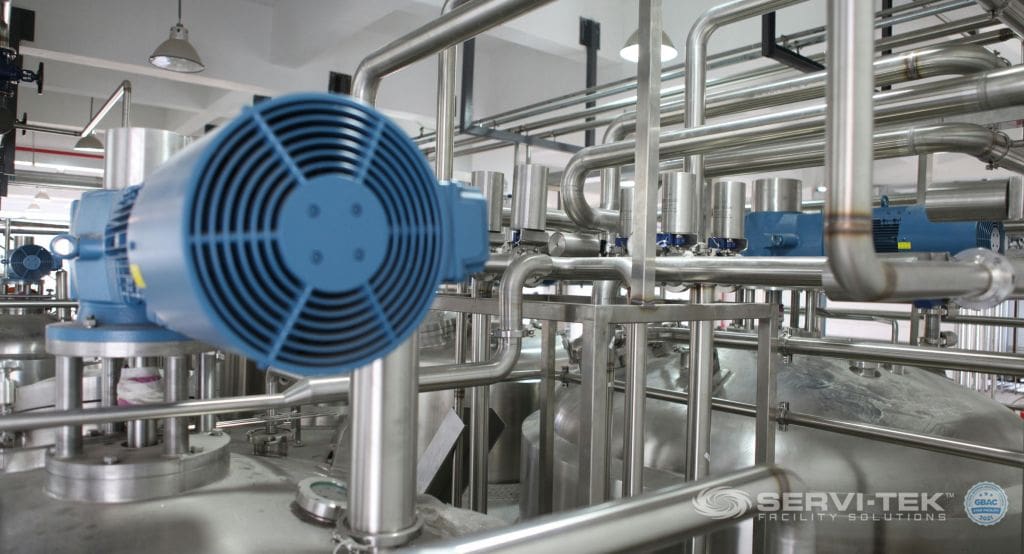
In 2026, a single failure cannot be allowed to cascade. Redundancy is no longer just a spare generator; it is a fault-tolerant architecture.
| System Configuration | 2026 Standard Application |
| N+1 | Standard for general lab ventilation and basic lighting. |
| 2N (Mirroring) | Mandatory for cryo-storage, incubators, and AI server clusters. |
| 2(N+1) | The “Trophy Standard” for BSL-3 labs and clinical manufacturing. |
Digital Twin Failovers: High-end 2026 facilities use a Digital Twin to run quarterly “stress tests.” The Building Management System (BMS) can simulate a pump failure and execute a sub-second failover before the lab technicians even notice a pressure drop.

Water Scarcity Resilience: In markets like Arizona and California, 2026 redundancy includes water storage and recycling. Systems are being designed for zero-liquid discharge to ensure that cooling towers keep running even during municipal water restrictions.
The Bottom Line
In 2026, the value of a biotech building is measured by its resilience. Owners who invest in high-density power, low-GWP HVAC, and 2N redundancy aren’t just protecting science—they are protecting their equity.