A pipe bursts at 11 PM. Your HVAC system fails the morning of a major board meeting. The server room temperature starts climbing overnight.
These aren’t rare scenarios… they are routine facility management risks. Yet, most facility service vendors are not operationally structured to respond when it matters most. Most facility emergencies occur outside standard business hours, yet most vendor hotlines simply route callers to an automated voicemail system.
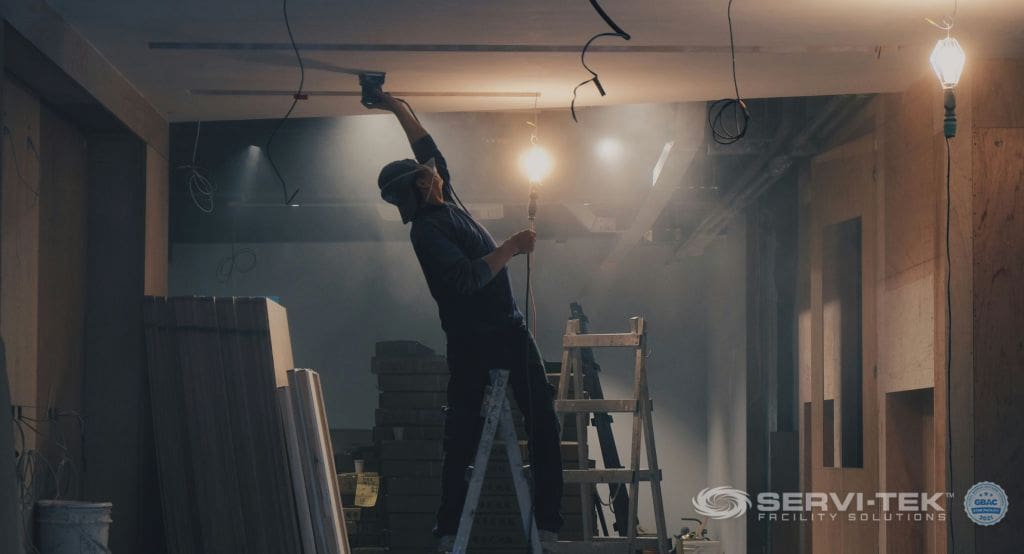
That operational gap between the moment a crisis occurs and when a qualified technician actually arrives on-site is where property damage and operational costs compound exponentially. A six-hour HVAC failure in a commercial office building does not just result in temporary tenant discomfort. It triggers formal tenant complaints and lease escalations, causes immediate productivity loss across entire floors, risks catastrophic equipment overheating in IT closets, and forces expensive emergency workarounds that inflate annual operational budgets.
The real question isn’t whether facility emergencies will happen… it’s how quickly and effectively your service vendor responds when they do.
Industry Response Time Benchmarks: The Gap Between Promise and Reality
Most facility service contracts contain emergency commitments outlined within Service Level Agreements (SLAs). On paper, these contractual guarantees look pristine:
- 2-hour maximum response time for emergency events
- 24/7/365 operational availability
- Dedicated priority support lines
However, standard contract language often obscures what occurs in real-world scenarios—especially at 2 AM on a Sunday.
In standard facility maintenance contracts, “emergency response” is frequently defined merely as a dispatcher logging a ticket or an automated callback within a specified timeframe, rather than a qualified technician arriving on-site with tools in hand.
When a property manager dials an emergency line late at night, the standard operational workflow often breaks down:
- The call routes to an automated system or a third-party answering service.
- An off-site agent logs the basic incident details.
- The answering service attempts to contact an on-call technician via phone or pager.
- The technician calls back hours later to assess the situation remotely before mobilizing.
This process frequently consumes hours before a vehicle leaves the shop, allowing minor facility issues to escalate into severe structural or mechanical damage.
Dispatch Centers vs. Dedicated On-Call Technicians
A major reason for response failure is the structural difference between a call dispatch center and a dedicated emergency response team.

Dispatch centers focus on logging requests, routing calls, and coordinating external resources. On the other hand, dedicated on-call technicians are scheduled specifically for after-hours deployment, hold direct site coverage responsibilities, and maintain fully stocked service vehicles ready for immediate dispatch.
When a facility service provider relies solely on generic dispatch operations without dedicated, geographically staged on-call staff, emergency response times become completely unpredictable.
Most maintenance providers optimize their business models around daytime operations, treating night and weekend coverage as a secondary function. This structural design inherently creates overnight staffing shortages, delayed coordination, and inconsistent service delivery. For property managers responsible for high-value commercial assets, this operational uncertainty introduces severe financial risk.
What a Real Emergency Response Program Looks Like
An effective facility emergency response program is engineered long before a crisis occurs. For critical operations like emergency commercial HVAC repair, a proactive service structure requires five core elements:
- 24/7 Live Answer: Live operators answer incoming calls immediately, possess technical knowledge to triaging issues, and dispatch resources without routing callers to voicemail or callback queues.
- Site Familiarity: Technicians assigned to emergency coverage already understand your facility layout, system configurations, sub-panels, and main shutoff valves, eliminating wasted time searching for critical equipment upon arrival.
- Pre-Defined Backup Protocols: Primary coverage is backed by clear secondary and tertiary rotation schedules to maintain seamless continuity if multiple site emergencies strike simultaneously.
- Documented Escalation Paths: Clear protocols outline named supervisors, direct phone lines, and explicit triggers for deploying secondary crews or specialized equipment when an issue exceeds single-tech capacity.
- Real-Time Situation Updates: Structured communication protocols ensure property managers receive clear timelines and status reports as repairs progress, enabling prompt updates to occupants and executive stakeholders.

How to Test Your Vendor Before an Emergency Happens
Evaluating a vendor’s emergency capability during an active crisis leaves no room for course correction. Property managers can validate their service provider’s operational readiness in advance through a few key tests:
- Test the After-Hours Line: Call your vendor’s emergency dispatch number on a Saturday afternoon or late at night. Evaluate whether a live representative answers, how quickly the request is processed, and whether the intake agent demonstrates technical understanding.
- Inquire About Backup Coverage: Ask directly who responds if your primary assigned technician is unavailable. A reliable vendor will immediately provide a named backup structure and explain their coverage rotation.
- Audit Historical Response Data: Request actual response time metrics and documented field resolution times from recent emergency service calls across similar commercial properties.
- Verify On-Site Documentation: Confirm how many technicians on the vendor’s roster have conducted site walks at your property, and verify how site-specific maintenance data is documented and shared across their team.
- Review Formal Escalation Procedures: Obtain a detailed outline of how complex emergencies are escalated to field supervisors or company leadership when standard protocols are insufficient.
Why Emergency Preparedness Matters
In major commercial markets, complex building systems, strict tenant SLAs, and dense urban logistics amplify the impact of maintenance delays. Heavy traffic and restricted site access require vendors to maintain strategic geographical positioning to meet fast turnaround times.
Prompt emergency response is far more than a basic service metric—it is a critical driver of total cost control. Vendor delays during critical HVAC or plumbing failures lead directly to tenant lease disputes, secondary structural damage, and costly emergency restoration fees that far exceed standard contract rate differences.
Emergency readiness forms a vital pillar of a commercial facility’s overall risk management strategy. Partnering with a maintenance provider that maintains real 24/7 operational infrastructure, enforces strict escalation pathways, and guarantees true on-site response times protects both your asset value and tenant trust.
At Servi-Tek Facility Solutions, we back our commitments with operational systems, guaranteeing an emergency response for HVAC and mechanical failures. Contact us today!