The HVAC system is the heart of any commercial or residential building, providing heating, ventilation, and air conditioning to ensure occupant comfort and high-quality indoor air. However, because these systems are often out of sight, they can be easily neglected. Proactive maintenance is not only the key to a longer-lasting system, but also a way to reduce energy costs and prevent major breakdowns significantly.
This guide provides a comprehensive checklist of tasks performed during HVAC maintenance, detailing both the simple functions that can be handled by you and the crucial services that require a professional technician.
Why HVAC Maintenance is Essential

A well-maintained HVAC system offers a range of benefits that directly impact your bottom line and the overall well-being of your building’s occupants.
- Significant Energy Savings: HVAC systems account for a large portion of a building’s energy consumption. According to the U.S. Energy Information Administration (EIA), commercial buildings use a substantial amount of their energy on heating and cooling. A dirty or inefficient system has to work harder to maintain the desired temperature, leading to higher utility bills.
- Extended Equipment Lifespan: Regular preventative maintenance helps identify and fix minor issues before they become significant problems. Just like a car, an HVAC system with consistent upkeep will last longer, delaying the need for a costly full replacement.
- Improved Indoor Air Quality (IAQ): A clean system is a prerequisite for clean air. Filters, coils, and ducts that are clogged with dust and debris can circulate pollutants, mold, and allergens, leading to poor indoor air quality. Professional maintenance ensures these components are clean, creating a healthier environment. For more on this, see our guide to Indoor Air Quality Improvement.
- Enhanced Safety: A key part of furnace maintenance is checking for safety hazards. Technicians inspect for carbon monoxide leaks, which can be life-threatening. The Centers for Disease Control and Prevention (CDC) provides essential information on the dangers of carbon monoxide and the importance of professional inspections.
Your HVAC Maintenance Checklist
A comprehensive HVAC tune-up involves a combination of basic cleaning and a thorough technical inspection. Here’s a breakdown of what a professional technician does during HVAC maintenance.
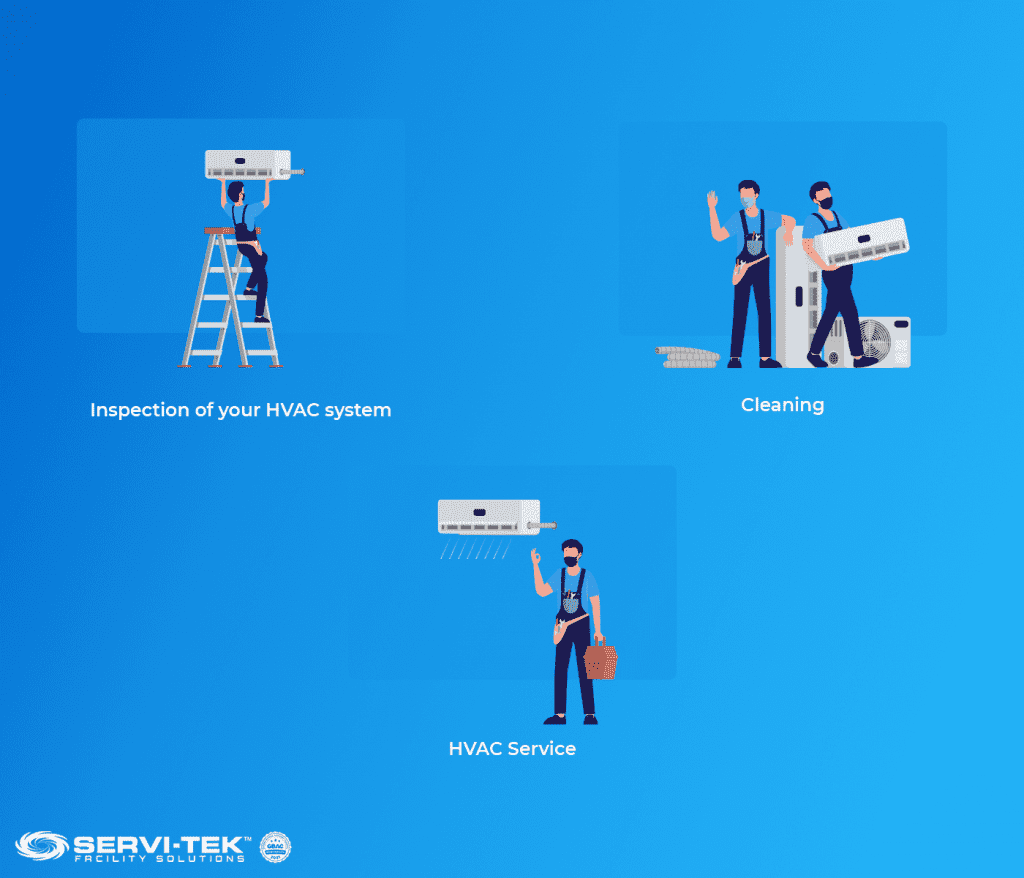
Professional Tasks: A technician’s inspection and service extend far beyond basic cleaning to ensure the entire system operates safely and efficiently.
- System Inspection: The technician will thoroughly inspect the entire system, checking components like the compressor, heat exchanger, and coils for signs of wear and tear, and ensuring all parts are in good working order.
- Electrical Check: All electrical connections and wiring are inspected and tightened to prevent fire hazards and ensure proper operation.
- Refrigerant Check: The technician will verify that the refrigerant levels are correct and check for any leaks.
- Component Cleaning: This includes professional cleaning of the coils and other internal parts that are difficult to access, which helps optimize airflow and heat exchange.
- Safety Checks: The technician will perform a carbon monoxide leak test on furnaces and inspect all built-in safety features to ensure they are functioning correctly.
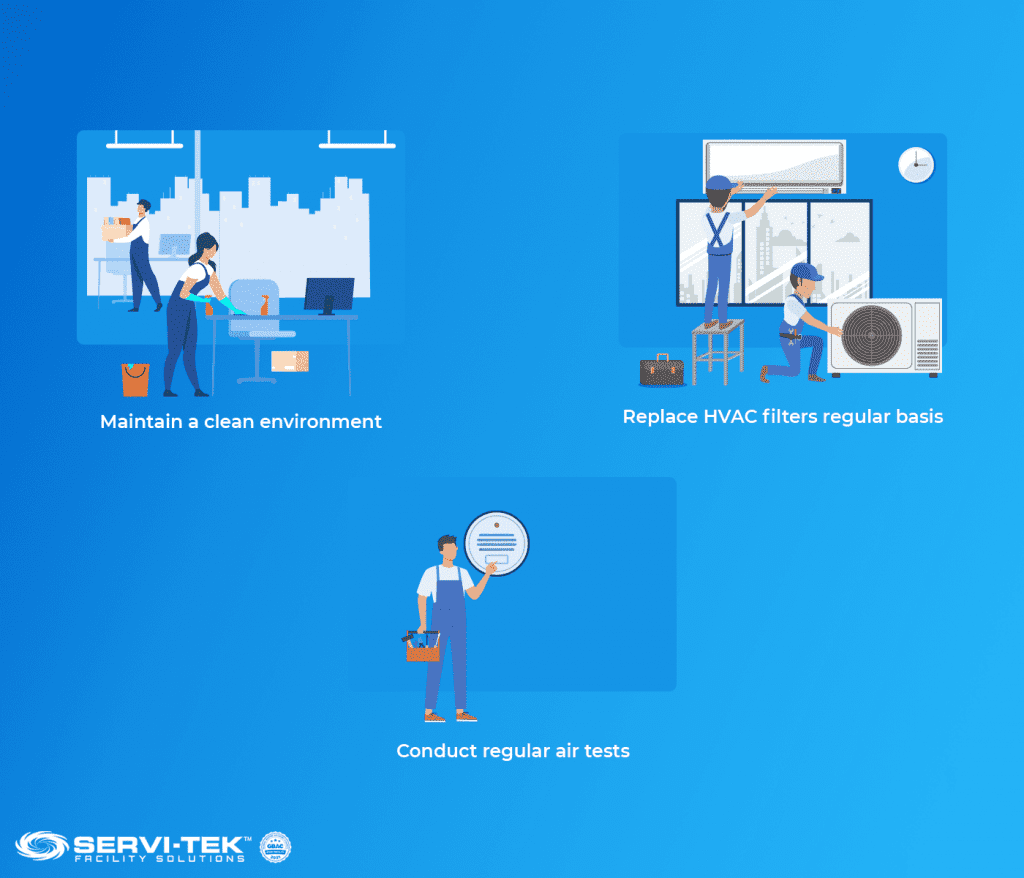
Tasks for You and Your Team. There are a few simple maintenance tasks you can perform regularly to keep your system running smoothly between professional visits.
- Change Filters Regularly: This is the most essential and straightforward task. Clogged filters are the number one cause of HVAC inefficiency and are often the root of system problems. For more information, refer to our post, “The Ultimate Guide to AC Filter Replacement.”
- Keep Units Clean: Make sure the area around the outdoor unit is clear of leaves, grass, and other debris that can obstruct airflow.
- Check Vents and Ducts: Ensure all indoor vents are open and unobstructed. Periodically check ductwork for leaks or damage.
- Monitor Condensate Drain: The drain line can become clogged with dirt and algae, so it’s a good practice to check it and clear it if necessary to prevent water damage.
Is It Time for a New System?
Even with regular maintenance, every HVAC system will eventually reach the end of its life. Here are a few signs that it might be time to consider a replacement:
- Frequent Repairs: If you find yourself scheduling repairs often, the cost of a new, more efficient system may be a better investment.
- Unusual Noises: Squealing, banging, or metal-on-metal sounds can indicate serious mechanical problems, such as a failing blower motor or loose parts.
- Longer Run Times: An aging system will often run more frequently or for more extended periods to achieve the same temperature, which is a clear sign of diminishing efficiency.
By partnering with a professional HVAC company, you can obtain a precise estimate for a new system and ensure that you receive a unit that is adequately sized and installed to meet your facility’s specific needs. Ultimately, proactive HVAC maintenance is an essential precaution to safeguard your company’s comfort, resources, and peace of mind.